
2025-12-26
MPCVD equipment enables diamond films to achieve high-end application value
CVD Encyclopedia source:wattsine author:wattsine

Diamond, one of the hardest materials in nature with exceptional thermal conductivity, possesses unique physicochemical properties that make it irreplaceable in numerous high-end applications, such as tool coatings, heat dissipation for electronic devices, optical windows, and biomedical uses. However, natural diamond reserves are scarce and prohibitively expensive, making it unsuitable for large-scale industrial production. The development of chemical vapour deposition (CVD) technology has provided an effective method for synthesising artificial diamond films. Among various CVD techniques, microwave plasma chemical vapour deposition (MPCVD) equipment, with its distinct technical advantages, has become the mainstream and core apparatus for depositing high-quality CVD diamond films.


Working Principle of MPCVD Equipment


The operation of MPCVD equipment is based on the microwave excitation and dissociation of reaction gases. Inside a low-pressure deposition chamber, microwave energy is coupled into the reaction zone through specific means, ionising gas mixtures such as methane and hydrogen to generate a high-temperature plasma. The hydrogen atoms produced from hydrogen dissociation exhibit strong reducing properties, enabling the selective etching of non-diamond carbon phases. Methane, as the carbon source, decomposes within the plasma to form carbon-containing active radicals. Under precisely controlled process conditions—including temperature and pressure—these radicals adsorb onto and migrate across the substrate surface. Eventually, they undergo epitaxial growth around diamond nucleation sites, forming continuous and dense diamond films. Compared to other CVD techniques (e.g., hot-filament CVD and direct-current plasma CVD), MPCVD generates plasma with distinct advantages: high purity, absence of electrode contamination, and exceptional stability, which collectively provide the foundation for producing high-performance diamond films.


Advantages of MPCVD-Deposited Diamond Films


The technical strengths of MPCVD equipment are evident across several critical aspects during diamond film deposition. First, its high-precision plasma control allows accurate regulation of the reaction zone temperature and plasma density, thereby effectively controlling the diamond film's grain size, defect density, and growth rate. By optimising process parameters, high-quality diamond films can be produced with low defect concentrations, exceptional hardness (Vickers hardness > 100 GPa), and superior thermal conductivity (> 2000 W/(m·K)), meeting the stringent material requirements of high-end applications. Second, MPCVD equipment exhibits strong adaptability, being compatible with various substrate materials such as silicon, tungsten, molybdenum, and silicon carbide. It supports customised growth of films ranging from nanometre-scale ultrathin layers to millimetre-thick coatings, catering to diverse needs from laboratory R&D to large-scale industrial production. Moreover, the deposition process offers excellent repeatability and uniformity, enabling consistent large-area diamond film growth. This significantly reduces production costs and accelerates the industrial adoption of CVD diamond.


Applications of MPCVD-Deposited Diamond Films


In practice, CVD diamond films deposited by MPCVD equipment show broad potential across multiple sectors. In machining, coating tools with diamond films significantly enhances wear resistance and cutting performance, extending tool life—especially in precision machining of high-hardness materials like carbon fibre composites and ceramics. In electronics, the exceptional thermal conductivity of diamond films makes them ideal heat spreaders for high-power devices, effectively addressing thermal management challenges while improving device stability and longevity. In optics, diamond films offer broad-spectrum transparency along with outstanding wear and corrosion resistance, making them suitable for infrared optical windows and protective coatings for laser components. In biomedicine, their excellent biocompatibility and readily functionalisable surfaces enable applications in biosensors and coatings for artificial joints.


Driven by the ever-increasing demand for high-performance materials in advanced manufacturing, the application scenarios for CVD diamond films continue to expand, placing higher demands on MPCVD equipment. In the future, MPCVD systems will evolve towards higher power, larger deposition areas, and more precise process control. Through advanced integration with technologies such as artificial intelligence and automated control, they will further enhance deposition efficiency and quality stability while reducing production costs.


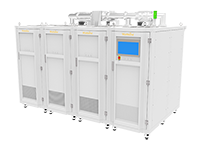
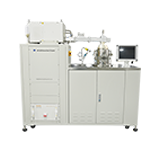
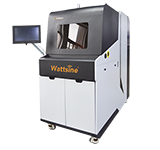
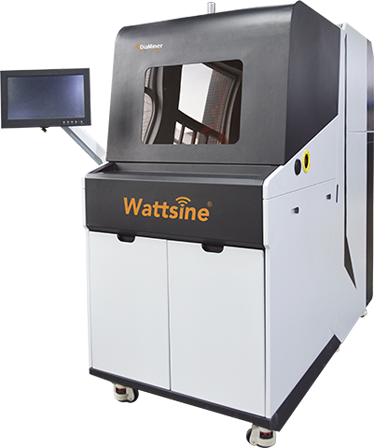
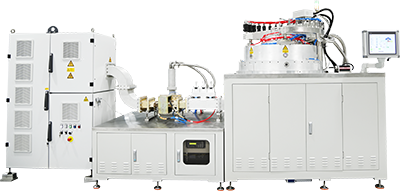
(Image: High-power, large-format diamond film deposition equipment)

The Wattsine HMPS-9750S MPCVD system demonstrates significant advantages in diamond material preparation, particularly for polycrystalline diamond growth. Featuring an industry-leading 915MHz microwave frequency and 75kW high-power design, it achieves a plasma discharge diameter of 300mm, providing a robust platform for large-scale production.

Its core strength lies in exceptional production capacity. A single furnace can produce polycrystalline diamond wafers up to 12 inches in diameter. When configured for single-crystal diamond growth, one furnace run can stably yield up to 1,000 pieces (7×7 mm), significantly boosting output while effectively reducing unit costs.

Furthermore, the HMPS-9750S incorporates multiple proprietary technological innovations, ensuring outstanding product quality consistency and long-term process stability. These technical advantages collectively enable customers to reduce costs and improve efficiency, thereby enhancing the market competitiveness of their products.

Concluding Remarks

With its unique technological advantages, MPCVD equipment serves as the core enabler, propelling CVD diamond films from laboratory research to industrial application. Wattsin believes that through continuous technological iteration, MPCVD systems will persistently drive the innovative development of diamond materials. They will provide critical material support for technological breakthroughs in high-end manufacturing, electronics, information technology, biomedicine, and other fields, demonstrating immense market potential and application value.

Related Product
More products
028 - 85964177
minhong.wan@wattsine.com